Chinese and japanese medicine
Acupuncture is a technique within the millenary Traditional Chinese Medicine (TCM), best-knownby the WHO. It is perhaps one of the best known techniques used in TCM because it has many more studies and therefore more scientific evidence.
According to Chinese thought, the universe is Qi, just as for modern physics, the universe is energy. TCM sees our body as a microcosm of the universe of which it is a part. Energy or Qi permeates everything, the body and the surrounding environment are linked by Qi. This Qi circulates through our body via the meridians, and manifest symptoms or illnesses are the result of altered Qi. In other words, when our defences are low and/or an external agent is very strong, the interaction of the opposing Yin/yang forces is disturbed, harmony is lost and the body ends up falling ill.
Traditional Chinese medicine seeks to restore the flow of Qi and is based on the Five Element Theory, which deals with the interaction of the forces of nature with each other, to preserve the Yin-Yang balance and stimulate the body’s own regenerative capacity.
It is closely linked to Taoist philosophy, which focuses on achieving longevity and virtue in harmony with the forces of nature. All this is in a theoretical system based on research and observation.
Moxibustion
Moxibustion is another technique of Traditional Chinese and Japanese Medicine that involves stimulating Chinese acupuncture points and channels or an affected area with heat. The dry moxa herb Artemisia Vulgaris is used for this purpose, either in pressed form (pure moxa) or in the form of a cone, granite, etc., or specially prepared boxes, depending on the area and the need.
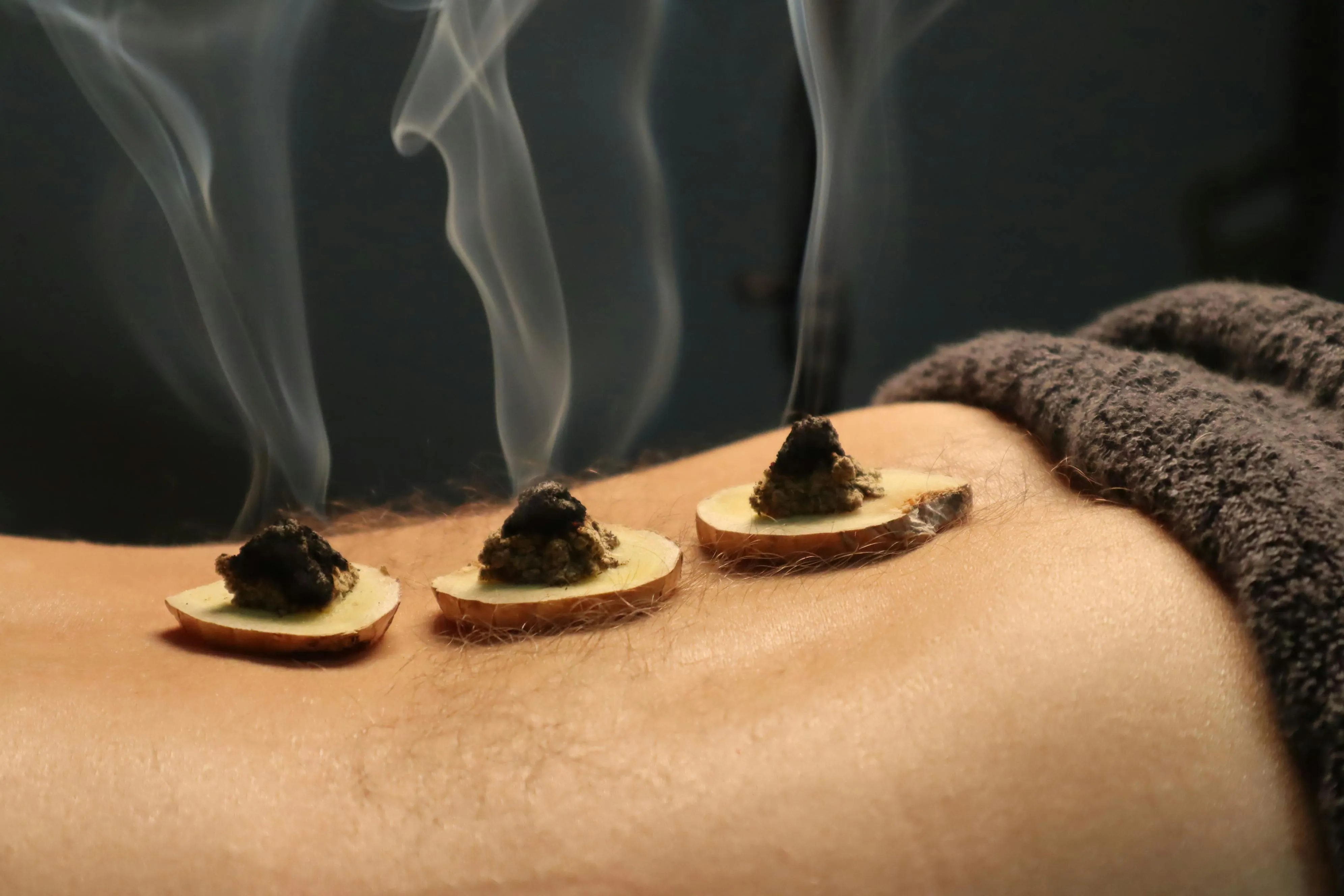
The heat of the moxa penetrates deep into the tissues, stimulating blood circulation and energy circulation, bringing nutrients to the area and vitality. The sensation is usually relaxing and pleasurable.
Tuina
A massage technique from Traditional Chinese Medicine that uses rhythmic compression, kneading, percussion, friction, rotation, rocking, and stretching, along the meridians to improve the functioning of tendons, bones and joints.
Cupping
This consists of applying suction cups which, by suctioning the skin, stimulate blood and lymphatic circulation, bringing more nutrients to the area and favouring the elimination of toxins and unblocking acupuncture meridians.

This suction produces circular areas of purple erythema that disappear after a few days, which should be taken into account.
Guasha
Guasha is a soft-edged tool for massaging and scraping the body’s energy pathways to release toxins and blockages, draw pathogens from the inside to the outside, promote blood circulation and relieve tension.
The scraping often causes redness, called petechiae, which dissipates after a while.
Guasha is also used to drain and tighten facial skin in beauty treatments.
Chinese herbal medicine
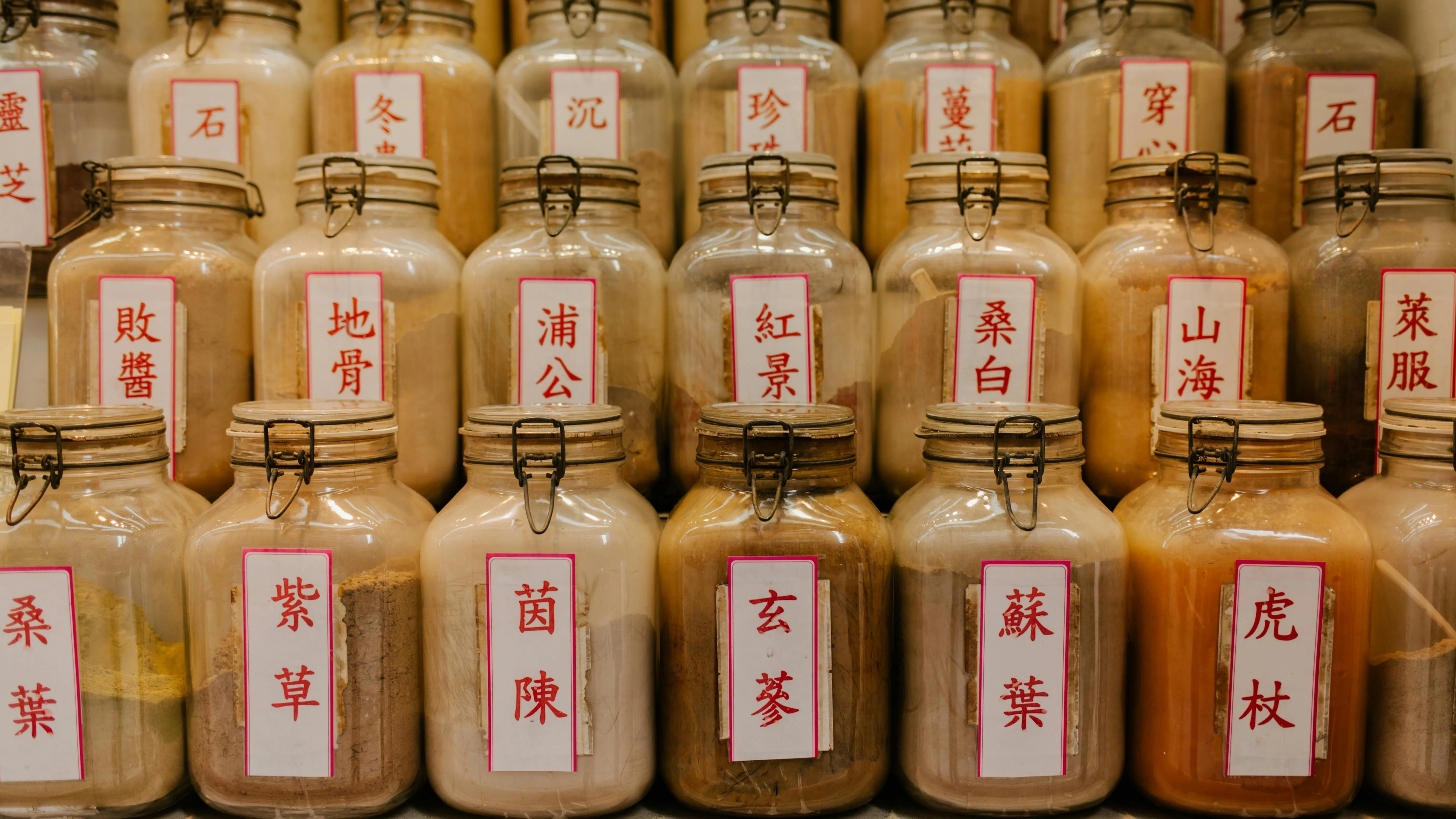
TCM classifies foods and medicinal plants according to particular criteria of flavour, direction and nature. Based on these criteria, herbal compounds are formulated for each specific use. They are potent and effective.
For more information:
National Library of Medicine. Understandings of acupuncture application and mechanisms.
La Organización Mundial de la Salud (OMS) “Estrategia sobre Medicina Tradicional 2014-2023”
Mayo clinic. Acupuntura del oído.
Elsevier. Introducción a la acupuntura. Fundamentos e interés para el médico de Atención Primaria.